Harvest
Hand Harvesting: This means the grapes wereharvested by a team of people who cut each grape cluster by hand, placed the grapes in a basket, and brought them to the winery.

Typically, this process is used by smaller producers since labor costs and harvest speed can become factors in large vineyards. The benefit is that the grapes can be hand selected and more carefully harvested which results in a higher quality finished product.
Pre-Fermentation
Whole Cluster Press: In this process, the grapes are placed into the press as full clusters, stems and all. There are many different types of presses used for this process, but the reason for using whole cluster press is to quickly separate the juice from the skins. This can be beneficial for certain white wines where the producers might want as little skins contact as possible.
 The amount of pressure used by the press can determine the amount of juice extracted. The juice that flows out easily in the beginning is called the “free-run” and is usually the best juice available from the grapes. The more pressure the press uses, the more juice that will be extracted, but will bring with it elements from the skins, seeds, and stems.
De-stemming: Here, the grapes are put through a machine which both separates the grapes from their stems, and also breaks the skins of most of the grapes, releasing the juice. The process produces a mixture called the grape “must.” This is mostly juice, but with all the grape skins and seeds remaining in the mixture.
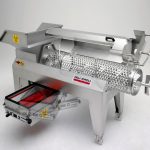
Typically, this process is used for red wines since it allows the juice to extract elements from the skins, but it can also be used for certain white wines or rosés that call for some skin contact.
Cold Soaking: Once the grapes have been de-stemmed into a container, the producer can then decide if they want to soak the juice for an amount of time.
Most of the color, flavor, and structure of a finished wine comes from the grape skins, so the longer the juice is in contact with the skins, the more of each gets extracted. However, this doesn’t mean that the longer the juice sits on the skins, the better the wine. In fact, the producer needs to be careful to extract the right amount of elements so that the finished wine does not end up imbalanced.
The temperature of the juice during this time is important as well. The tannins of the skins and seeds of the grape must will be extracted quicker with alcohol, so as long as the juice remains cold, fermentation will not begin, and the juice can pull out color and flavor first without extracting too much tannin.
Fermentation
Stainless steel: This vessel is used to both ferment and age wine. It can come in all shapes and sizes and be equipped with a number of features like temperature control and valves.
Stainless steel does not impart any outside flavors to the wine like oak would, so it can be used to preserve the original nature of the juice for the finished product. It is also very easy to clean, and because of the temperature controls it can be much more accurate during the fermentation process.
The steel tanks also do not let any oxygen in as oak barrels would, so they can be used for anerobic winemaking, which is beneficial to preserving freshness and fruit flavors, especially in white wines.
Oak: The role of oak in the fermentation process can add a number of desired elements to the finished wine. Oak barrels are usually used for the aging process, and depending on the age of the barrels, certain flavors can be imparted into the juice from the barrel itself like vanilla, caramel, smoke, as well as structural elements like tannins.
Interestingly, when a wine is fermented in an oak barrel rather than aged in one, it can actually reduce some of these characteristics so that the finished wine isn’t overpowered by any one element. The way this works is that when the wine is fermenting in the barrel, it starts to extract the flavors and tannin from the wood. However, most of these flavors are being picked up by the yeast, which can be filtered out of the wine at any time. Once the yeast is removed, the wine is left with a subtle note of the barrel fermentation without being imbalanced.
Oak also lets a small amount of oxygen into the wine, which will typically add complexity to the finished product.